Precision Tooling for Microfluidic Manufacturing
Microfluidic mold tooling directly determines the replication accuracy, surface quality, and dimensional consistency of molded microchannels. To ensure medical-grade quality, tooling must be engineered around the device geometry, thermoplastic material, and strict cleanroom production requirements.
Micromolds develops precision microfluidic tooling for repeatable replication of complex microstructures, ensuring a seamless transition from prototype validation to high-volume cleanroom manufacturing.
Our tooling approach supports:
High-fidelity microchannel replication
Stable feature dimensions
Controlled micro-scale surface quality
Repeatable microstructure replication
Scalable production tooling
Precision tooling forms the foundation of scalable microfluidic manufacturing.
Microfluidic Mold Inserts and Micro-Feature Control
Microfluidic mold inserts must reproduce complex channels, chambers and micro-scale features while maintaining dimensional stability across repeated molding cycles.
Micromolds develops precision mold inserts around the critical geometries, material behavior and production requirements of each microfluidic device.
Capabilities include:
-
High-precision micro-feature mold inserts
-
Gate positioning for controlled polymer flow
-
Micro-venting strategies
-
Shrinkage compensation in tooling design
-
Surface finish control
-
Thermal stability for repeatable production cycles
Tooling decisions directly affect microfeature replication, dimensional stability and the performance of the final microfluidic component.

Tooling Strategies for Microfluidic Manufacturing
The right microfluidic tooling strategy depends on feature geometry, required surface quality, material, validation stage and expected production volume. Micromolds selects the tooling approach according to both technical requirements and the intended path to production.
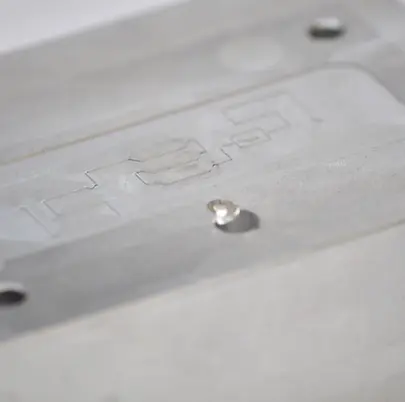
Laser-Machined Precision Tools
High-resolution tooling for complex microfluidic geometries entering serial production.
Used for:
-
High-resolution microchannels
-
Tight-tolerance features
-
Controlled surface finish
Benefits:
-
Improved feature fidelity
-
Dimensional stability
-
Repeatable microstructure quality


Trusted by
Leading Brands and Clients